


Episodic narrative games are one of the most intriguing genres of gaming. They blur the lines between comics, TV series, and video games until you don’t know where one begins and the other ends. In most forms of media we consume, the reader (or watcher) is akin to a passenger in the back seat of a car speeding down the freeway, helpless to the decisions of the driver. In episodic narrative games, you are given full and free rein to take the wheel and decide where you want to go, with each decision spelling out strong consequences for the narrative. Telltale Games used to routinely put out hard-hitting, stylized stories with familiar faces in situations that are far removed from the norm (in Batman: The Enemy Within, you could actually recruit the Joker as a potential Robin).
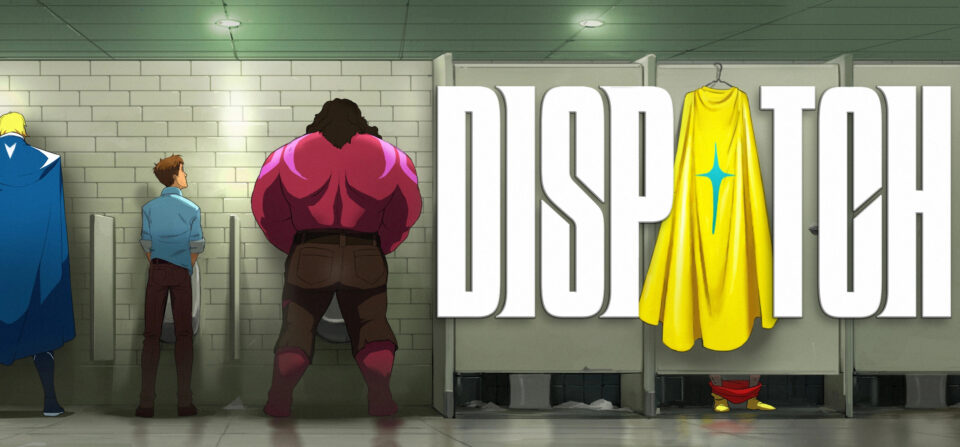
But there’s been a dearth of the kind of episodic video games that were a staple of the 2010s, and now in 2025, Dispatch has answered that call. AdHoc Studio, an indie game company comprising veterans of the episodic narrative gaming industry from Telltale’s golden era, has dispatched its first game, fittingly titled Dispatch.
You don the suit of Robert Robertson III, who, aside from the name, has inherited the legacy of Mecha Man — an ordinary man who becomes a hero when powered by his suit. He’s got the combat skills of Batman combined with Iron Man’s suit and Spider-Man’s bank account. Cynical, broke, and jaded, Robert and his suit have been held together with a combination of grit and duct tape until his father’s killer, Shroud, destroys his suit (and him in the process). Now, down and out, he’s recruited by fellow superhero Blonde Blazer to join the Superhero Dispatch Network (SDN) as a dispatcher in return for them fixing his suit.
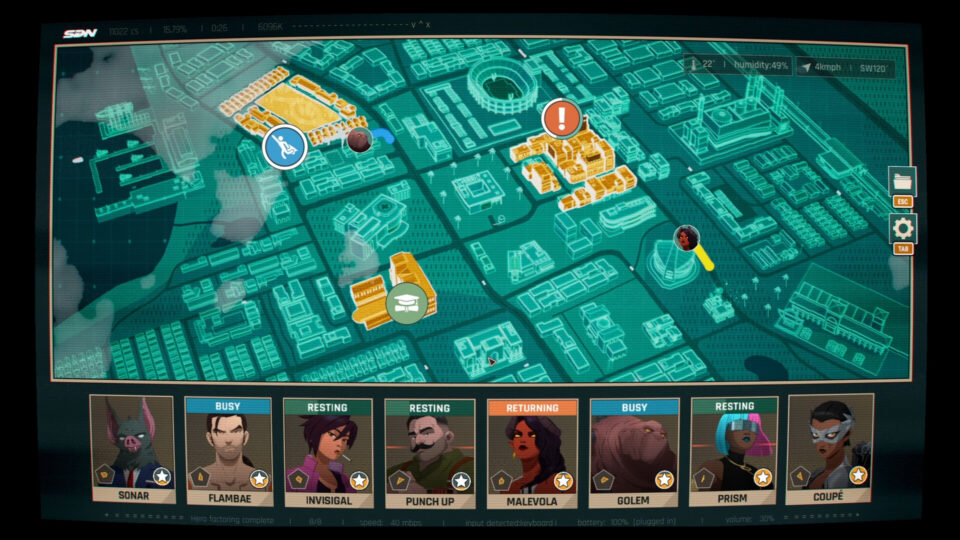
At the SDN, Robert is in charge of dispatching the Z-Team, part of the Phoenix Program dedicated to rehabilitating villains. Think of it like managing the Suicide Squad, but with a competent Amanda Waller. This is where the primary gameplay mechanics come into play.
L.A. has a lot of emergencies. From cats stuck in trees, to drug busts, to theft, to judging talent shows, not to mention the looming threat of the Red Ring led by Shroud. Robert needs to evaluate each situation and send the right hero for the job. Fail the dispatch, and the city suffers; your hero gets hurt, and the next time you dispatch that hero for a job, chances for success are minimal. But remember, these rehabilitated heroes are people too (people being used loosely, since Sonar happens to be a bat-human hybrid, Malevola is a demon, and Golem is a construct), with faults of their own. They have their strengths and weaknesses; they synergize with certain members of the team and sabotage the others. They’re villains on their first hero gig, who, like you, are new to this.
Sometimes, Robert can intervene in a larger capacity. Just because his suit is out of commission doesn’t mean he is. Certain jobs call for the skill set of a hacker, something Robert is proficient in. Some of these are timed sequences where you occasionally get anti-viruses trying to stop you from fixing the system. Robert generally has three chances to succeed before he fails, and certain sequences are really challenging. For those who want a smoother, stress-free playstyle, however, there is an option to turn on the unlimited hacking attempts mode from the main menu.
Stakes are also higher because the emergency calls don’t last too long. Wait around and these blips on the map disappear, leaving dissatisfied citizens and dangerous repercussions. But your heroes also need to get some R&R before they’re dispatched again if you want them to be at the top of their game. In other words, Robert needs to keep an eye on the clock, his team and the city while constantly putting out fires both in and out of the workplace.

Robert is a hero through and through; he fights like a hero, talks like a hero, and stands for what a hero believes in. The Z-Team, however, thinks otherwise — they don’t even know who Robert is. For them, he’s just the guy behind the desk who sends them into the line of fire, an ultimate outsider in a world where people have superpowers. Over the course of the game, Robert has the opportunity to forge bonds and really rehabilitate these reformed villains, giving them the confidence that everyone is capable of being good.
This is where the narrative gameplay shines. It’s the little things, from a simple bro-fist with your new colleague to exercising restraint when handling your team or deciding to go for the least favorite flavor of a doughnut, that influence the other characters’ perception of Robert. There are also the large story beats that affect the world around him — a decision you make way back in episode one may come back to haunt you all the way in the finale. Each door you open closes another, and at the end of each episode, you can see whether or not you’re in the majority. There’s no right answer; there are only different choices, but that’s what adds to the replay value of this game.
The beauty of Robert Robertson III is that, at his core, he is a good person, and nothing you do to him can change that. You might choose how Robert acts, decide the kind of person he is, or the person he’s becoming, but you can’t really mold him into something he’s not. That doesn’t mean that you can’t influence the kind of people Robert comes into contact with —keep in mind, a kind word goes a long way.
Of course, this wouldn’t be a workplace comedy if there wasn’t some drama. You can’t keep everyone happy. Robert is on the verge of committing multiple HR violations, between romancing his superior (Blonde Blazer) or his ex-villain protégé (Invisigal), though keeping romance out of the equation entirely is also an alternative. Meanwhile, he has some tough decisions to make as he figures out who to cut and who to keep on the Z-Team. These decisions have the power to change the dynamics of the group entirely, and the missions suffer as a result of it. Do you want to give a chance to the anxious trainee who shows promise or a depressed Superman-esque hero who could use the encouragement? It’s an unenviable position to be in, and it doesn’t help that the cast of characters are endearing and well fleshed out. The stacked voice cast — featuring Aaron Paul (Breaking Bad), Jeffrey Wright (The Batman), Matthew Mercer (Critical Role), Laura Bailey (The Last of US II) Yung Gravy, Jacksepticeye, and MoistCr1TiKaL, among many others — do a fantastic job of bringing them to life.
Dispatch’s writing also sucks you in from the get-go. It’s grounded, despite the superhero setting. There’s no fantastical otherworldly threat; it’s people, their decisions, and what pushes them to the brink. Robert has only ever known life as the Mecha Man and expects to die in the suit just as his grandfather and father did. But when the suit’s taken away, what’s left? It’s interesting to see someone who’s trying to rebuild himself mentor a group in the same situation. There’s a line in the game that sticks with you: “We joke, we laugh, we suppress our trauma.” And that really sums up what it means to keep going in a world that’s pushing you down.
Its weekly episodic release schedule meant a painful wait to see the consequences of your choices, fervently praying they would turn out for the best. Now that all the episodes are out, you can binge-play the whole season. Somewhere along the way, Dispatch has managed to be one of the most engaging games and TV series this year.
Not all heroes wear capes; some also sit behind a desk.


Leave a Reply