


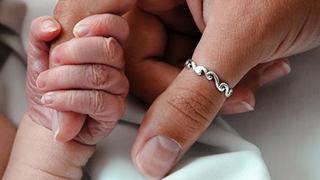
If a person becomes newly infected during pregnancy, her viral load is often very high, which greatly increases the chance of passing the virus to the baby. Image used for representational purposes only
| Photo Credit: Getty Images/iStockphoto
Mother to child transmission of HIV remains one of the major challenges in the effort to eliminate HIV in children. HIV can pass from a mother to her baby during pregnancy, during delivery or through breastfeeding. Over the years, early antenatal HIV testing, treatment for pregnant women living with HIV and medicines for newborns have reduced transmission rates across many regions. However, an important concern continues to appear in clinical practice. Some babies are still diagnosed with HIV even though their mothers tested negative during pregnancy. This worrying pattern, often called the silent transmission gap, highlights key gaps in testing, timing and follow-up care.

Understanding testing gaps
Many women test negative in early pregnancy, but may acquire HIV later. If a person becomes newly infected during pregnancy, her viral load is often very high, which greatly increases the chance of passing the virus to the baby. A single test at the start of pregnancy may therefore miss new infections that happen later.
After a new infection, there is a also a ‘window period’ — an interval of time during which standard screening tests may not detect HIV even though the virus is present. During this time, the chance of transmitting HIV is high. This means a pregnant woman may test negative despite recently acquiring the infection.
Usually, only one HIV test is recommended during the early stages of pregnancy. Hence, without repeated testing in the later stages of pregnancy and during breastfeeding, some new infections have a high chance of being undetected. This creates a missed opportunity for early treatment and prevention.
The risk of transmission is especially high if the mother acquires HIV during late pregnancy, delivery or the breastfeeding period. Transmission can happen before birth, during birth or after birth through breast milk.

What can be done?
To close this silent gap, the following steps are important:
For pregnant women: Repeat HIV testing in the later months of pregnancy, testing again at the time of delivery and testing during breastfeeding can help to check for the infection. Additional testing should be carried out for women with recent exposure or symptoms.
For infants: Early virologic testing soon after birth and repeat follow-up testing if needed can go a long way.
Prompt treatment must begin in case of a positive result.
These steps help identify infections early and ensure timely treatment and prevention.

Closing the gap
The occurrence of HIV in babies whose mothers test negative during pregnancy, indicates a significant gap in prevention efforts. This gap is not due to treatment failures in known HIV positive mothers, but mainly due to the occurrence of new maternal infections, the window period and a lack of repeat testing.
A few basic steps such as enforcing repeated testing regulations, improving close follow-ups especially during pregnancy and breastfeeding and ensuring early infant testing will go a long way toward ensuring that essential steps are taken to protect the newborns. Closing this silent transmission gap is crucial as part of the global effort to eliminate HIV in children.
(Dr. Amol Jaybhayeis consultant – paediatric infectious diseases, Narayana Health SRCC Children’s Hospital, Mumbai. Info.Srcc@narayanahealth.org)
Published – December 01, 2025 01:24 pm IST


Leave a Reply