


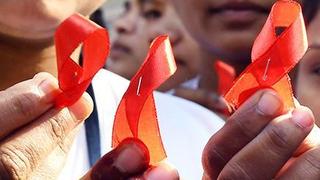
The consensus behind the old model of financing the HIV response may be coming to an end, but the international community is forging a new, more sustainable path. Photograph used for representational purposes only
| Photo Credit: V RAJU
The United Nation estimates that 40.8 million persons are living with HIV globally, and among them 25,44,000 are in India. In 2024 alone, there were 1.3 million new infections reported worldwide, with India reporting 68,450 new cases.
Advances in medicine
Today, with the availability of potent antiretroviral therapy (ART), persons with HIV who have access to these medications do not become sick with AIDS, the illness caused by the HIV. Research has shown, that the life expectancy of people living with HIV who are receiving ART and are virologically suppressed, is almost similar to persons who don’t have HIV. . This has become possible due to the scientific discoveries of several antiretroviral medications which are given in combination to persons with HIV.
There are no vaccines to prevent HIV infection, but with the discovery of lenacapavir, a new, long-acting injectable antiviral medicine, HIV can today be prevented if lenacapavir is given twice a year as pre- exposure prophylaxis(PrEP). This is exciting news for an infection that has no cure.

Funding crisis
A UNAIDS report shows that at the end of 2025, just before a sudden collapse in global funding triggered a crisis in the global AIDS response, the remarkable efforts of communities and governments had brought down the numbers of new HIV infections by 40% and of AIDS-related deaths by 56% since 2010. But it also shows that huge gaps in HIV prevention remained, with 1.3 million new infections in 2024—almost unchanged from the year before.
The sudden withdrawal of the United States, the single biggest contributor to the global HIV response, disrupted treatment and prevention programmes around the world in early 2025. International assistance accounts for 80% of prevention programmes in low- and middle-income countries. UNAIDS modelling shows that if the funding permanently disappears, there could be an additional 6 million new HIV infections and an additional 4 million AIDS-related deaths by 2029.

The Indian scenario
In India, more than 95% of funding for HIV treatment and prevention is supported by the government. India’s generic manufacturers supply 92% of the antiretroviral medications prescribed globally. While these are laudable measures and efforts, India is yet to implement lenacapavir PrEP through its national programme, and this is a gap that needs correction. Efforts should be made, and political impetus given, to implement PrEP in India to achieve the target of zero new infections.

The path ahead
The consensus behind the old model of financing the HIV response may be coming to an end, but the international community is forging a new, more sustainable path. It is time for low- and middle-income countries to take ownership of supporting HIV prevention and treatment efforts in their healthcare programmes rather than depending on international assistance.
Already, 25 of 60 low- and middle-income countries have found ways to increase HIV spending from domestic resources into 2026 as shown in the UNAIDS report. This is the future of the HIV response — nationally-owned and led, sustainable, inclusive and multisectoral solutions. This transformation cannot happen overnight however: global solidarity and renewed commitment from funding partners will be needed as countries plan and lead sustainable transitions towards self-financing. India has done this well and can lead global efforts.
The HIV response has already saved 26.9 million lives worldwide. With an HIV prevention revolution, we could end AIDS as a public health threat, saving many more lives says Winnie Byanyima, executive director of UNAIDS. And it could be better value for money too: UNAIDS estimates that if the world, including India, embraces new technologies and newer interventions, the annual cost of the HIV response could fall by around US$ 7 billion globally.
(Dr. N. Kumarasamy is chief and director, VHS Infectious Diseases Medical Centre, Voluntary Health Services, Chennai and vice president, AIDS Society of India. kumarasamyn@gmail.com)
Published – December 01, 2025 10:42 am IST


Leave a Reply