


Every October 29, World Stroke Day serves as a reminder that stroke is both a medical emergency and, in many cases, a preventable one. While most awareness efforts focus on the “golden hour” after a stroke — the crucial first few hours for treatment — doctors now say the real focus should be before the major event occurs. Advances in imaging, screening, and stenting techniques have made it possible to prevent many strokes long before they strike.

Brain warns before it breaks
“Nearly 80% of strokes are preventable,” says Pradeep Balaji, senior consultant neurosurgeon, Iswarya Hospital, Chennai. “But we often miss the warning phase — the days or weeks when the brain gives early signals in the form of transient weakness, speech issues, or vision loss.”
These warning episodes, called Transient Ischemic Attacks (TIAs) or “mini strokes,” are temporary but serious. Specialists stress that a TIA should be treated as a full-blown emergency. “Evaluation should be done immediately, ideally within 24 hours,” says Prabash Prabhakaran, director and senior consultant, neurology, SIMS Hospital, Chennai. “The earlier we find the blockage, the better our chances of preventing a bigger stroke.”

Understanding blockages
When someone experiences chest pain, they often rush to the hospital and get a heart angiogram. If an artery is blocked, a stent is placed to restore blood flow. The same principle applies to the brain — except that the brain doesn’t feel pain.
“Just as cholesterol deposits can narrow the arteries of the heart, they can also affect the vessels supplying the brain,” explains Srinivasan Paramasivam, senior consultant neurosurgeon and head of neuro-endovascular Surgery, Apollo Hospitals, Chennai. “If the narrowing is mild, we manage it with medicines. But when it crosses 70% or causes neurological symptoms, we treat it with a stent or surgery.
Shrivarthan R., consultant Neurologist at MGM Healthcare, Chennai, adds that intervention is typically considered when there’s more than 50% narrowing. “Every patient first needs lifestyle modification, blood pressure and sugar control, and antiplatelet therapy. If a significant block remains, we choose between surgery or stenting depending on the patient’s condition and vessel anatomy.”

How brain stenting works
A brain stent is a tiny mesh tube that keeps narrowed or blocked arteries open, restoring blood flow to oxygen-starved regions. During the procedure, doctors insert a catheter through a small incision in the groin or wrist and guide it to the affected artery using imaging.
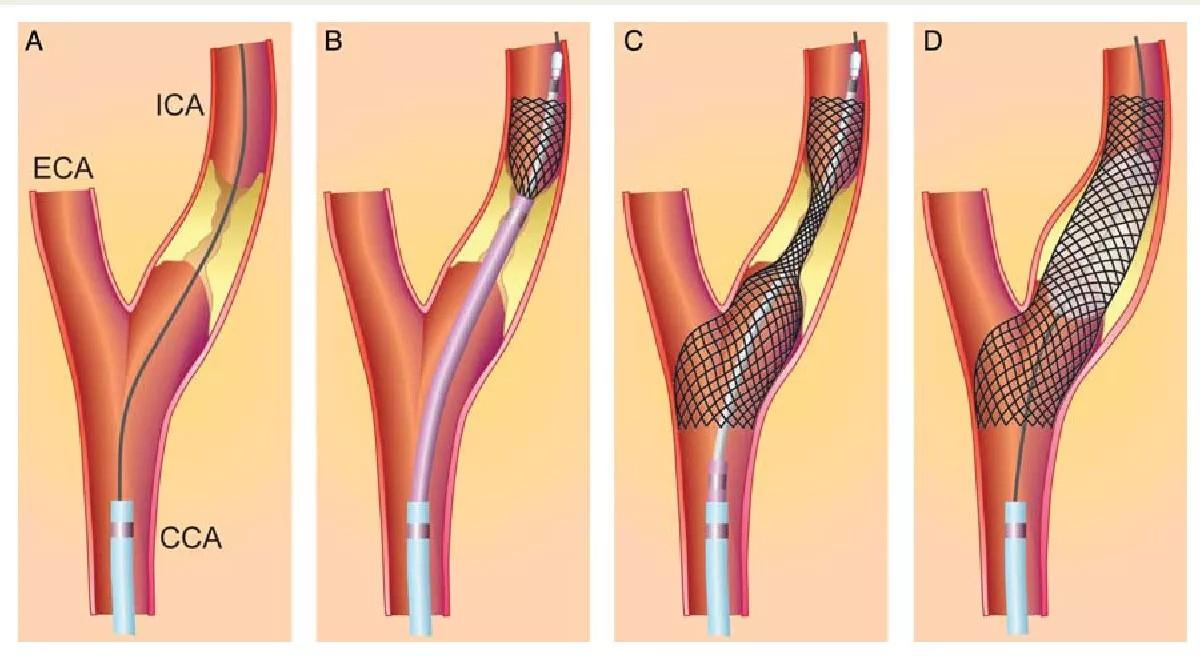
Used in minimally invasive procedures, stents prevent blockages from recurring, with modern versions often coated with medication to improve outcomes or even made to dissolve over time
| Photo Credit:
Special Arrangement
For neck vessel narrowing, self-expanding stents are used, often along with a temporary “umbrella-like” filter to catch any debris and prevent complications. Inside the brain, where arteries are more delicate, balloon-mounted or drug-eluting stents may be placed.
“These procedures are done to prevent a major stroke before it happens — what we call secondary prevention,” says Dr. Srinivasan. “They’re performed once we detect early signs of reduced blood supply or small transient attacks.”

Diagnostics for prevention
Modern neuroimaging has transformed stroke diagnosis and prevention.
“We now have MRI sequences that can detect vessel wall problems and identify patients who can still benefit from treatment even beyond the typical 4.5-hour window,” says Dr. Shrivarthan. “Perfusion imaging, DWI-FLAIR mismatch — a pattern seen on brain MRI scans in acute ischemic stroke, where the injury is visible on Diffusion-Weighted Imaging (DWI) but not on Fluid-Attenuated Inversion Recovery (FLAIR) images, and better-quality stents have improved both accuracy and safety.”
Dr. Prabhakaran adds that for those with multiple risk factors — diabetes, smoking, hypertension, or a family history of stroke — screening can start with a simple Carotid Doppler test (uses sound waves to assess blood flow through the carotid arteries in the neck, which supply the brain with blood). “If something looks suspicious, a CT or MR angiogram can confirm if intervention is needed,” says Dr. Prabhakaran
Routine screening for everyone, doctors say, might not be cost-effective. But identifying and monitoring high-risk individuals can make a major difference.
Prevention is key
“Stroke is still one of the leading causes of death and disability worldwide,” says Arun Kumar M., consultant neurologist and epileptologist, Gleneagles Hospital, Chennai. “But it is also one of the most preventable.”
He points out that managing hypertension, diabetes, cholesterol, and heart rhythm problems such as atrial fibrillation are crucial in reducing risk. “Lifestyle changes, smoking cessation, regular exercise, and dietary balance are just as important as medical treatment,” he says.
The “BE FAST” awareness campaign remains central: B for Balance disturbance; E Eye or vision changes; F– Face drooping ; A– Arm weakness; S – Speech difficulty; T – Time to act — “Recognising these signs early and getting to a stroke-ready hospital can save the brain and life,” Dr. Arun Kumar stresses.
For years, stroke systems have focused on emergency rescue. Today, the focus is widening to include early detection and prevention , identifying brain vessel blockages before they cause irreversible damage.
With evolving imaging techniques, improved stent technology, and a better understanding of stroke risk, neurologists believe brain stenting could soon play the same preventive role that heart angioplasty did decades ago.
“Just like we don’t wait for a heart attack to treat blocked arteries,” says Dr. Pradeep Balaji, “we shouldn’t wait for a major stroke either. The science and technology to prevent it already exist — what we need is awareness and timely action.”
Published – October 31, 2025 10:37 am IST


Leave a Reply