


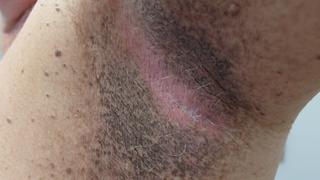
Acanthosis Nigricans can manifest in skin folds and creases such as behind the neck, underarms, under the breasts, the groin, even the elbows or behind the knees as dark, thick, rough or velvety skin patches
| Photo Credit: Von Dr. Thomas Brinkmeier – Eigenes Werk, CC BY 4.0, https://commons.wikimedia.org/w/index.php?curid=106307371
Acanthosis Nigricans (AN) is a skin condition characterised by dark, velvety patches on skin folds. While it can occur due to various reasons, it is strongly linked to insulin resistance, which makes it an important early, warning sign for prediabetes and diabetes. For many individuals, AN is one of the first visible clues that the body is struggling to regulate blood sugar levels.

Understanding AN
Acanthosis Nigricans can manifest in skin folds and creases such as behind the neck, underarms, under the breasts, the groin, even the elbows or behind the knees as dark, thick, rough or velvety skin patches. Causes for AN can be obesity, insulin resistance, metabolic syndrome, diabetes mellitus and extremely rarely, in melanomas, stomach or liver malignancies. In children and young adults, the presence of AN is often considered a clinical marker of rising diabetes risk.
The skin changes associated with AN do not appear overnight, but develop gradually over the course several months. The affected skin may sometimes be itchy or emit a foul odour along with hyperpigmentation. When associated with insulin resistance, the darkening often progresses fast.

Diagnosis and treatment
Acanthosis nigricans is typically detected during a clinical examination. Because of its strong association with metabolic disorders, your doctor may recommend blood tests to check for blood sugar levels, insulin levels, a lipid profile, and other metabolic parameters to detect and confirm underlying causes.
Treatment and outcomes depend on the underlying cause of the AN. In most cases related to obesity or insulin resistance, improving metabolic health can help lighten the skin discoloration. People with obesity may be encouraged to lose weight by making dietary modifications and lifestyle changes. Medications for insulin resistance and/or obesity may be used along with dietary and lifestyle modifications if the case profile mandates the same.
The use of prescription creams to lighten or soften the affected areas, antibacterial soaps for gentle cleansing, topical antibiotic cream, and laser therapy can also help with the reduction of pigmentation once the primary cause is addressed.

Take early action
Acanthosis Nigricans does not mean that your skin is dirty or dark. It can affect any skin type and colour. Your skin is a window to many underlying medical issues, and Acanthosis Nigricans is a sign that your body is experiencing a medical issue that needs treatment. If you have AN consult your doctor for lab testing and possibly imaging studies, to rule out serious illnesses, and to evaluate for prediabetes or diabetes, which remain the most common underlying causes.
Acanthosis Nigricans is more than just a skin change. It is often the body’s early signal that something deeper may be wrong, especially with insulin, blood sugar and overall metabolic health. Identifying AN early gives both children and adults a chance to detect prediabetes or diabetes before complications set in. With timely evaluation, lifestyle corrections and treatment of the underlying cause, most people can reverse or significantly improve AN. Paying attention to subtle skin changes is therefore an important step towards protecting long term health and preventing diabetes and metabolic diseases.
(Dr. Abhishek Kulkarni, consultant, paediatric Endocrinology, Narayana Health, SRCC, Children’s Hospital, Mumbai Info.Srcc@narayanahealth.org)
Published – November 16, 2025 09:00 am IST


Leave a Reply